

What is a husbando? Meaning, origin and types explained
Short version: a husbando is a fictional character you love like a partner, and the word is a playful spin on the English “husband.” The longer version — where it came from, how it differs from a waifu, what best boy means, and why people get attached — is right below.
Find your husbando type ↓In short
A husbando is a fictional male character from anime, manga or games that a fan adores as their ideal “husband”. It’s the male counterpart of a waifu and expresses affectionate fandom, not a literal relationship.
Husbando · definition
Husbando (noun) — a fictional character, usually a man and usually animated, that a fan adores as their fictional partner. From the English “husband,” bent into a deliberately playful shape. Female equivalent: waifu.
What does husbando mean?
Strip away the meme and a husbando is simple: it is a fictional character someone has chosen as their own, the way you might call a band your favorite band. He is the character you would marry if fiction worked that way. Most of the time he comes from anime, manga, or a video game, and most of the time he is drawn rather than filmed — though fans bend both of those rules whenever they feel like it.
The tone matters as much as the definition. Saying “he is my husbando” is rarely a deadpan statement of fact. It carries a grin. People use it the way they use any fond exaggeration — with a smile and a bit of self-awareness, knowing full well the character is fictional and meaning it anyway. The attachment is real; the framing is light.
That mix of sincerity and play is the whole flavor of the word. A husbando is part inside joke, part genuine soft spot, and the fun comes from holding both at once.
Where the word comes from
Husbando has a borrowed origin, and the borrowing is half the joke. It comes from waifu, which arrived first. Waifu traces to a single scene in the 2002 anime Azumanga Daioh: a teacher, asked whether he has a family, pulls out a photo and answers in English, “my wife.” Said with a Japanese accent, “wife” lands closer to “waifu” — and that pronunciation stuck.
Once waifu was common slang, fans wanted a male counterpart, and they built it by running the same gag in reverse. They took the deliberately mangled sound of waifu and applied it to “husband,” landing on “husbando.” Nobody was trying to be elegant. The clumsy spelling was the point — it kept the word fond and tongue-in-cheek rather than earnest.
That backward coinage is fitting. Husbando lives exactly where anime fandom does — in the space between two languages, English filtered through Japanese and handed back with a wink, comfortable in neither and at home in the overlap.
Husbando vs waifu: the only real difference

If a waifu is the fictional wife, a husbando is the fictional husband. Same idea, opposite gender, same streak of deliberate silliness in the spelling. The two words were coined the same way, spread the same way, and mean the same thing pointed at different characters. If you have read our companion piece on what a waifu is, you already understand a husbando — just flip the pronoun.
Worth saying plainly: neither word belongs to one kind of fan. Anyone can have a husbando, a waifu, both, or a whole roster. The terms describe who a character is to you, not anything about the person doing the choosing. A husbando might be the brooding swordsman, the sunny class clown, or the quiet one in the back — the only rule is that he is the one you would pick.
For the full version of the female side, our guide to what a waifu is walks through the same ideas from the other direction — the two articles are a matched pair.
The words that travel with it
Husbando rarely shows up alone. A handful of other terms cluster around it, and knowing them makes any anime conversation a lot easier to follow.
🎮Otaku
A devoted fan of anime, manga, or games — the broader culture a husbando lives inside. Once a harsh label, now worn with pride by most fans.
🌸Bishonen
Japanese for “beautiful youth.” The elegant, fine-featured art style — long lashes, sharp jaw, perfect hair — that so many husbandos are drawn in.
🎨2D vs 3D
Drawn characters versus real people. Saying you prefer 2D is a wink at loving fictional worlds — usually said with a grin, not a manifesto.
💙Bias
Borrowed from idol fandom, your bias is the member or character you favor most. Close cousin to oshi and to picking a best boy.
Two more come up constantly. Oshi is the one character or performer you support above all others — close to a husbando, but framed around devotion and cheering rather than romance. Best boy is the favorite male character within a single show, the title fans defend in endless threads. Your best boy from a series often graduates into your husbando; the difference is just scope.
RPDATE picker
What is your husbando type?
Pick an archetype, pick a vibe, and we will sketch the kind of character that fits. No quiz, no sign-up — just a starting point.
1 · Choose an archetype
2 · Choose a vibe
Pick an archetype to begin.
Mini glossary
Tap to flip
Six words you will run into the moment you join any husbando conversation.
Husbando archetypes: the usual suspects
Ask a fan what kind of husbando someone likes and the answer usually comes back as a type. Anime has a well-worn set of them, and almost any fan-favorite guy slots into one or borrows from a couple. Here are the six that do most of the work — the same six the picker above runs on.


| Type | In a phrase | What it looks like |
|---|---|---|
| Tsundere prince | Proud and prickly, soft once you earn it | Hides the affection behind a scowl and denial |
| Cool kuudere | Calm, composed, hard to read | Feels deeply but shows it quietly, on his terms |
| Sunny himbo | Warm, simple, golden-hearted | Wears every feeling on his face, zero scheming |
| Mysterious bad boy | Guarded, magnetic, a little dangerous | Walls up high; one real smile feels earned |
| Gentle senpai | Kind, steady, a step ahead | Helps without making it a thing |
| Dark lord | Powerful, intense, devoted | Thrilling in fiction, far too much in real life |
Almost nobody is a pure type — characters mix two or three, with one in the lead. A tsundere prince can soften into a senpai once he trusts you; a bad boy often hides a himbo heart. The labels are a fast way to set expectations, nothing more. Several of these archetypes overlap with the dere personality types, which break down the tsundere and kuudere ends of the spectrum in full.
Husbando culture, and why people get attached
Here is the part that sounds stranger than it is. People form real feelings about fictional characters all the time — it is why a finale can leave you hollow, why you miss a cast after the credits, why a great rival stays in your head for years. Fiction is engineered to make you care, and it works on everyone. A husbando is just that ordinary pull pointed at one character and given a name.
A well-written character has things a real person cannot always offer: he is consistent, he is fully expressive, and he is there the moment you open the page. There is comfort in that reliability. Add the communal side — the fan art, the arguments over best boy, the shared shorthand — and a husbando becomes less a private crush than a way of belonging to a fandom.
For the overwhelming majority of fans it stays exactly that light: a favorite, a bit, a source of fun. It only becomes a problem when fiction starts standing in for a life rather than decorating one — and that is a question about balance, not about whether liking a character is allowed. Liking a character is one of the most human things there is.
How to find your ideal husbando
The classic way is the slow way: watch enough shows, play enough games, and eventually one character clicks. That is still the best way, and there is no shortcut to the feeling. But there is now a faster way to test what you actually respond to — and to do something with it once you know.
The picker above is the low-stakes version: choose an archetype and a vibe, and it sketches the kind of character that tends to fit. From there, AI roleplay turns a static favorite into a conversation. Instead of admiring a character from a distance, you set a scene and play it out — he replies in his own voice and holds his personality across the whole exchange. It will not make fiction real, but it is the closest thing to actually talking to the type you picked.
If chatting with a character is the part you are really here for, browsing the male characters you can talk to is the fastest way to find one whose archetype matches the result you landed on.
Male characters you can talk to
Категория мужских ИИ-персонажей: от заботливых и романтичных до жёстких и доминирующих. Можно подобрать характер под нужный формат сюжета.


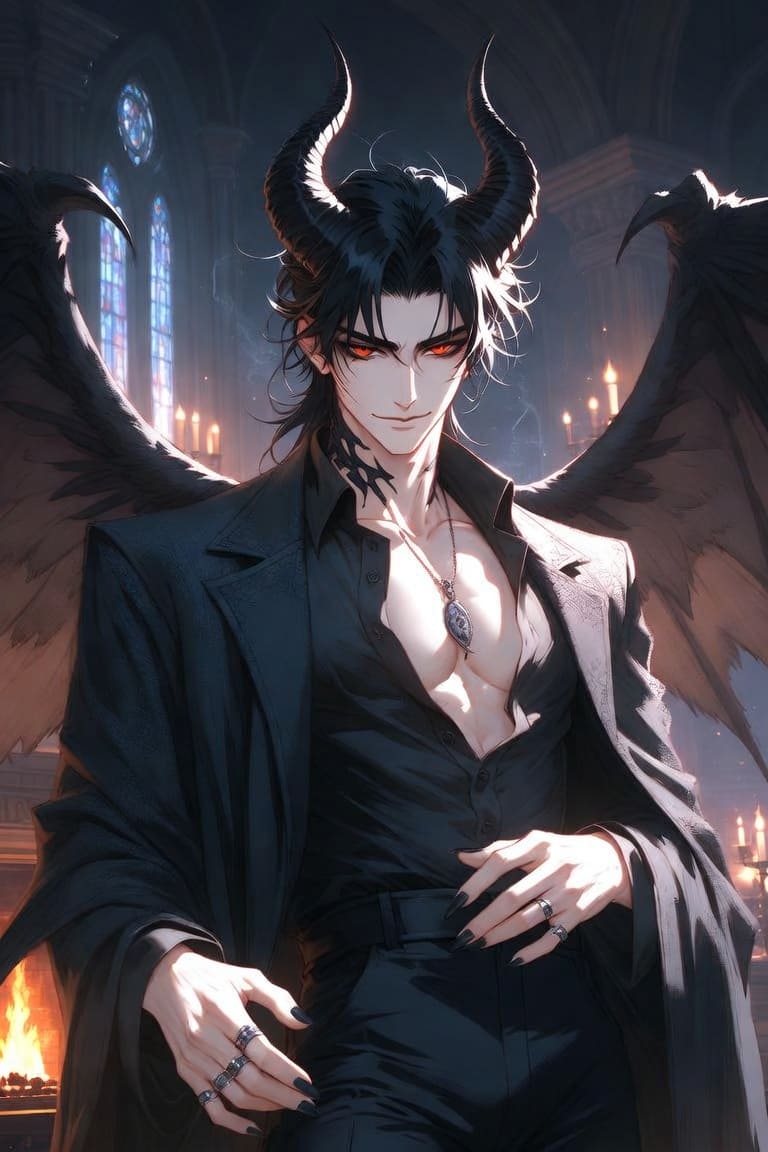

Swipe sideways
Found your type? Go meet him
Pick a character that matches the archetype you landed on, set the scene, and start a conversation in his own voice.
Browse male characters →no sign-up needed · in English · 18+ optional
Frequently asked questions
What does husbando mean?+
A husbando is a fictional character — almost always a man, almost always animated or drawn — that a fan thinks of as their fictional partner. The word is a deliberately playful spin on the English “husband.” It lands somewhere between an inside joke and a real attachment: calling a character your husbando is a half-grinning way of saying he is the one you would pick.
Where does the word husbando come from?+
It was coined by analogy with waifu. Waifu came first — it traces to a 2002 anime where a character says “my wife” in English and the Japanese pronunciation came out closer to “waifu.” Fans then ran the same joke backward onto “husband,” landing on the equally silly “husbando.” The goofy spelling is the whole point; it signals the term is fond and self-aware, not deadly serious.
What is the difference between a husbando and a waifu?+
Only the gender. A waifu is a fictional female character a fan claims as their own; a husbando is the male version. Same idea, same playful coinage, same mix of sincerity and humor. Anyone can have a husbando, a waifu, both, or a whole roster — the words describe who a character is to you, not anything about the fan doing the choosing.
What is the difference between a husbando and a boyfriend?+
A boyfriend is a real person you are in a relationship with. A husbando is a fictional character you feel a connection to. They are not in competition — plenty of people with partners still have a favorite character they call their husbando. It is closer to a strong, affectionate preference than a stand-in for a real relationship.
What does best boy mean?+
Best boy is the fandom title for your favorite male character in a particular show or game — your pick over every other option the story offers. It is the kind of thing fans defend in endless threads. Your best boy from a series often graduates into your husbando, but the phrase is specifically about ranking within one story.
What is an oshi, and how is it different from a husbando?+
Oshi comes from idol and fan culture and means the one performer or character you support and root for above all others. The difference is the angle: a husbando is framed romantically, while an oshi is about devotion and cheering someone on. Your oshi can absolutely be your husbando — the words just emphasize different feelings.
What are the main husbando archetypes?+
A handful of types come up again and again: the tsundere prince (proud and prickly, soft underneath), the cool kuudere (calm and composed), the sunny himbo (warm, simple, golden-hearted), the mysterious bad boy (guarded and magnetic), the gentle senpai (kind and dependable), and the dark lord (powerful and intensely devoted). Most characters mix two or three, with one in the lead.
What is a bishonen, and is it the same as a husbando?+
Not quite — bishonen describes a look, not a role. The word is Japanese for “beautiful youth” and refers to the elegant, fine-featured art style that a huge share of fan-favorite husbandos are drawn in: long lashes, delicate bone structure, effortless hair. A husbando is the character you have claimed; bishonen is one of the visual flavors many of them happen to share.
Why do people get attached to a husbando?+
Fiction is built to make you care, and a well-written character is consistent, expressive, and always there when you open the page. People form real feelings toward characters the same way they cry at films or miss a series after the finale. A husbando is that feeling given a name. For most fans it is lighthearted fandom, not a replacement for human relationships.
Can I actually talk to a husbando?+
Yes, in a sense. AI roleplay sites let you chat with characters who reply in their own voice and hold their personality across a conversation. It will not turn fiction into a real person, but it does turn a static favorite into a back-and-forth — pick an archetype, set the scene, and play it out. It is the closest thing to actually talking to the type you fell for.
Related reading
Where fans usually head next:
About The Author & Editorial Standards

RPDATE Editorial Team
Editorial pageEditorial Team
The RPDATE editorial team prepares practical guides on roleplay dialogue design, character dynamics, and scene structure. We focus on tested recommendations and clear product context.
This article is prepared by the RPDATE editorial team based on direct product usage, scenario testing, and platform-level comparison. We update guides when UX, pricing, filtering, or access conditions change.
What was tested:
- Real chat sessions with multiple character types and tags
- Conversation consistency, memory behavior, and prompt adherence
- Onboarding friction: signup, paywalls, platform constraints
Editorial policy
We separate observations from opinion, mark limitations explicitly, and avoid sponsor-driven ranking claims. If a section is outdated, we revise it after verification.
Verification & transparency
Recommended next reads
Gift from RPDATE - Balance Promo Code
Public promo code for blog readers: activate in your profile and get +5 balance bonus.
no activation limits