
What Is a Yandere? The Anime Archetype of Obsessive Love Explained
Sweet smile, devoted heart, and a love so intense it turns dangerous. The yandere is one of anime’s most magnetic archetypes. Here is what the word really means, the psychology behind why obsessive love fascinates us, the types, the icons, and where this fantasy belongs. With an interactive explorer and a quiz to find your own love style.
Explore and take the quiz ↓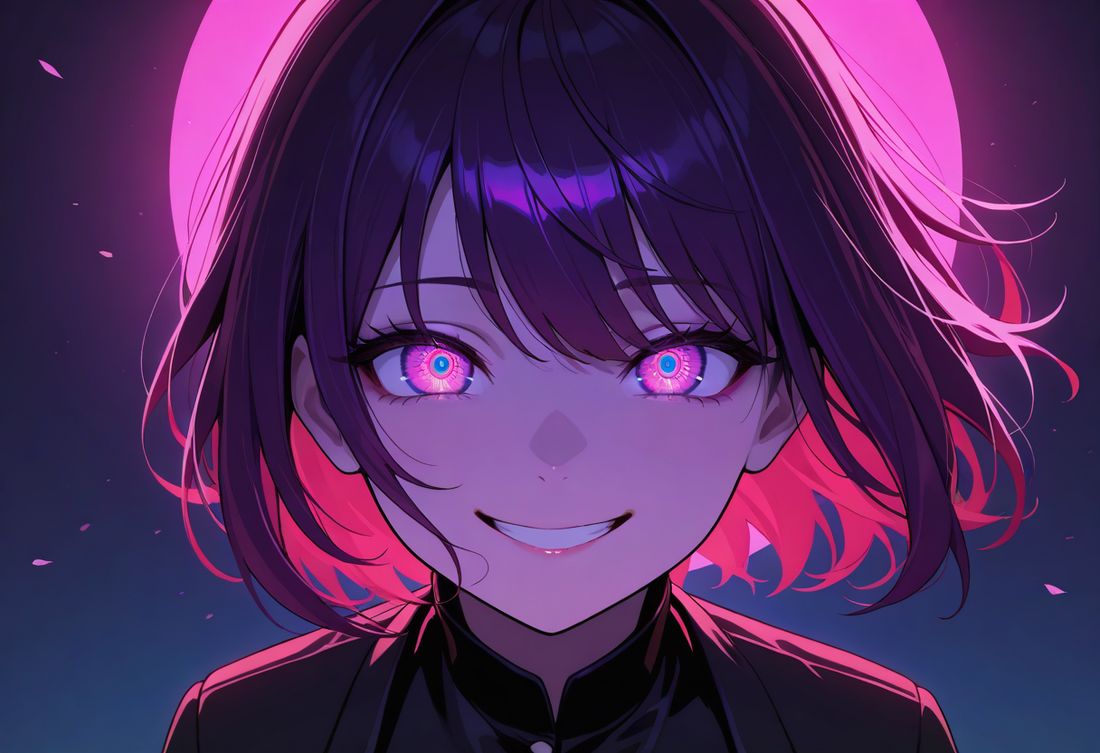
In short
A yandere is an anime character whose love turns obsessive and dangerous: sweet and devoted on the surface, but possessive and willing to go to extremes for the person they love. The name blends yanderu (to be sick) and dere (affection).
You know her the second she appears. The girl with the gentle voice and the soft smile, the one who seems almost too caring, until you notice the way her eyes follow you across the room. The yandere is anime’s answer to a dark, seductive question: what if someone loved you so much that it stopped being safe? She is tenderness and menace in the same breath, and that contradiction is exactly why she has become one of the most beloved character types in all of fiction.
The yandere is one branch of a whole family of anime personality archetypes known as the dere types. If you want the full map, our hub on the subject, what the dere types are, walks through all five (tsundere, yandere, kuudere, dandere and deredere) and how they fit together. This article is the deep dive on the most intense one of them all.
Below, we break down what “yandere” actually means, why obsessive love grips us so hard, how a yandere differs from a tsundere, the recognizable sub-types, and the iconic characters who defined the genre. We also draw a firm, honest line: in real life, jealousy and control are abuse, not romance. And then we point to the one place the fantasy can live safely. Plus an interactive explorer and a quiz to see how yandere your own love style really is.
RPDATE explorer
Explore the types of yandere
Tap any type to see how it behaves, its red flags and the anime characters that defined it. Not sure where your own heart lands? Take the mini-quiz below.
Obsessive yandere
You are her whole world
The purest form: every thought orbits one person. She memorizes your schedule, your habits, the people you talk to. Love here is not a feeling she has, it is the only feeling she has.
How she behaves
Fixates completely, replays your words, builds a private shrine of memories and keepsakes around you.
Reality check
In fiction this single-mindedness reads as breathtaking devotion. In real life it is a loss of self and a warning sign, not a love language.
Signature line: “I only ever think about you. Always.”
In anime: Yuno Gasai (Future Diary), Kaede Fuyou (Shuffle!).
💞
How yandere is your love style?
Six questions about jealousy, devotion and the way you love. Answer honestly and meet your inner yandere, safely on the fiction side of the line.
What a yandere actually is
The word is a portmanteau, and once you see the two halves you never forget it. “Yan” comes from the Japanese verb “yanderu” (病んでる), meaning to be sick, and crucially that includes sickness of the mind or the heart, not just the body. “Dere” is clipped from “deredere” (デレデレ), the lovestruck, melting-with- affection state of being sweet on someone. Put them together and you get someone who is, almost literally, lovesick: a person whose affection has become an illness.
That etymology is the whole archetype in a nutshell. A yandere is not simply a villain who happens to be in love. The love is real, often the realest thing about her, and that is what makes her unsettling. She is devoted, tender and deeply attached, and then the same feeling that makes her sweet pushes her past every limit: jealousy, possessiveness, a willingness to do frightening things to protect the bond. The “dere” never disappears; it just curdles.
Like all the dere types, “yandere” is built modularly: a trait on the outside, tenderness underneath. The difference is that with a yandere, the outside trait is the sickness of obsession itself. That is why she sits at the far, dangerous end of the dere spectrum, the place where love and threat become impossible to separate.
The psychology: why obsessive love fascinates us
Here is the uncomfortable truth that makes the yandere work: almost everyone has felt a flicker of what she feels. The jolt of jealousy when someone you like laughs a little too long at another person’s joke. The wish, just for a moment, to be irreplaceable to someone. The yandere takes those ordinary, fleeting impulses and turns the volume to maximum. We recognize the seed even as we recoil from the bloom.
There is also the deep, near-universal fantasy of being chosen completely, of mattering so much to one person that nothing could pull them away. Real love rarely offers that absolute certainty; the yandere offers nothing but. To be the entire world of another human being is terrifying in practice and intoxicating in imagination, and fiction is the one place we can taste it without paying the price.

Finally, there is the thrill of danger held at a safe distance. A yandere story lets us flirt with the forbidden, the loss of control, the edge of violence, while we stay perfectly secure on the other side of the screen. Psychologists talk about “benign masochism,” the pleasure of fear we know cannot actually hurt us, the same reason we love horror films and roller coasters. The yandere is that, aimed straight at the heart.
Yandere vs tsundere: the classic mix-up
These two get confused constantly, which is funny because they are nearly opposites. The trap is that both seem to “hide” direct affection. But a tsundere hides it out of embarrassment, snapping “it’s not like I like you!” to protect a fragile pride. A yandere hides nothing about her love; she only disguises her obsession as devotion. In short: a tsundere grumbles but cares, while a yandere cares so much she won’t let go. This table separates them at a glance.
| 🔪 Yandere | 😤 Tsundere | |
|---|---|---|
| Core feeling | Cares deeply but won’t admit it | Loves so much there are no limits |
| Outward shell | Prickly, sarcastic, defensive | Sweet, devoted, sometimes too perfect |
| When jealous | Denies it, gets mad at herself | Acts on it: monitors, removes rivals |
| Biggest fear | Looking vulnerable | Losing you to anyone else |
| Signature line | “It’s not like I like you or anything!” | “You’re mine. Only mine. Forever.” |
| Real-life risk | Pushes people away with pride | Crosses the line into control and abuse |
| Examples | Taiga, Asuka, Rin | Yuno Gasai, Shion, Satou |
The simplest way to keep them straight: a tsundere is afraid of her own feelings, so she hides them. A yandere is overwhelmed by her own feelings, so she can’t contain them. One pushes you away to feel safe; the other pulls you in until neither of you is.
The types of yandere
Yandere is not one flat note; it is a chord. Fans tend to recognize five overlapping flavors, and most memorable characters blend a few of them with one trait in the lead. You can tap through every one in the explorer above; here is the quick tour.
💔 The obsessive
Every thought orbits one person. She memorizes your habits and treasures your every word. Pure, single-minded fixation, the textbook core of the archetype.
🕸️ The manipulative
Calm and scheming. She rarely raises her voice; she just quietly rearranges your world so the rivals drift away and you keep choosing her.
🔪 The violent
The horror-tinged version. When the bond is threatened she turns to harm, and this is the face that gave the genre its knife-in-the-dark reputation.
🔗 The possessive
Less violence, more ownership. Every friend is a rival, every hour apart a debt. She frames raw jealousy as proof of how deeply she loves.
🌹 The quietly devoted
The gentlest and often most unsettling. She is attentive, soft, almost the perfect partner, until you notice the lengths she will quietly go to so that nothing between you ever changes.
These categories bleed into one another, and that is the point. Yuno Gasai is obsessive and violent at once; Satou from Happy Sugar Life is manipulative and devoted. Once you learn the five flavors, you can taste exactly which notes a given character is hitting.
Iconic yandere in anime
If the archetype has a queen, it is Yuno Gasai from Future Diary. She is so definitive that for many fans “yandere” and “Yuno” are almost synonyms: a pink-haired sweetheart capable of unspeakable things, all in the name of a love she never doubts for a second. Study her and you understand the whole genre, the switch that flips from adoring to terrifying without ever passing through a moment of doubt.

The classics run deep from there. Higurashi gives us two, Shion Sonozaki and Rena Ryūgū, sweetness and horror braided together. Happy Sugar Life’s Satou Matsuzaka turned the manipulative, devoted strain into an entire psychological drama. My Hero Academia’s Himiko Toga reimagined the possessive yandere as a tragic, blood-obsessed villain you can’t look away from. School Days’ Kotonoha Katsura delivered one of the genre’s most infamous endings.
What unites them is never the body count; it is the disturbing sincerity. Each one genuinely, completely loves. The horror lives precisely in that purity of feeling, in watching real tenderness drive someone off a cliff. That is the magic trick at the heart of every great yandere: she means it.
Fiction vs real life: where the line is
We need to say this plainly, because it matters. Everything that makes a yandere thrilling on screen, the jealousy, the surveillance, the need to be your one and only, the willingness to push past your limits, is, in a real relationship, the definition of abuse. Not romance. Not “she just loves me that much.” Abuse.
⚠️ A real-life reality check
Checking someone’s phone, tracking where they are, isolating them from friends, demanding constant reassurance, exploding at any sign of independence, these are not signs of deep love. They are signs of control, and control is one of the clearest markers of an abusive relationship.
Healthy love does the opposite of a yandere. It wants you to have friends, freedom, a life of your own. It trusts. It lets you go and chooses you anyway. If a relationship in your life looks more like the chart above than like that, please talk to someone you trust or a support service in your country.
None of this spoils the fun of the archetype. It is the exact reason the fun works. A yandere is gripping because she takes love somewhere it should never actually go. Naming that line clearly is what lets us enjoy the fantasy honestly, without confusing a great character for a relationship goal.
Roleplay an intense anime heroine
Аниме-персонажи для ролевого чата: от милых знакомств до драматичных арок. Подходит для длинных сюжетов с развитием отношений и характеров.


Swipe sideways
Yandere roleplay with AI: the fantasy in its safe place
Here is the resolution to the whole tension of this article. The yandere fantasy is real, and it is powerful, and it absolutely should not be acted out on a living person. So where does it go? Into fiction, which is exactly what it was built for. A roleplay scene is the safe place where you can feel the heat of all-consuming devotion, the jealous edge, the “you’re mine forever,” with no one to harm and you in full control of the limits.
On RPDATE you can play out that dynamic with an AI character. You pick the heroine, set the tone and the situation, and steer the story with your own lines, like a co-writer. The AI plays the other half: it reads your tone, reacts to what you do and stays in character, devoted and intense as the scene calls for. Want a slow, simmering possessiveness? It’s yours. Want to dial the temperature up? The optional +18 mode turns on only if you choose it.
That is the difference between watching a yandere and living the fantasy yourself, with a clear conscience and a clear exit. The quiz above tells you how yandere your own love style leans; the catalog gives you a heroine to explore it with, safely.
Live the yandere fantasy, safely
Pick an intense, devoted heroine and set the scene exactly how you want it, all the heat of obsession with none of the harm.
Start a chat with Jinx →free · in English · +18 optional
Frequently asked questions
What is a yandere?+
A yandere is an anime and manga character archetype whose love for someone tips over into obsession. The word fuses the Japanese “yanderu” (to be sick, including sickness of the mind or heart) with “dere” from “deredere” (lovestruck, sweet). So a yandere is, almost literally, someone who is lovesick: outwardly devoted and affectionate, inwardly consumed by a love so intense it stops being healthy. The fascination comes from that collision of tenderness and danger.
What is the difference between a yandere and a tsundere?+
They are the two most confused dere types, and they are nearly opposites. A tsundere hides her affection behind a prickly, sarcastic shell and is terrified of looking vulnerable, so she pushes you away even though she cares. A yandere does the opposite: she shows her love at full volume, but that love spills into jealousy, possessiveness and a need to be your one and only. A tsundere is afraid to show what she feels; a yandere has no brakes on what she feels.
Why are yanderes so popular?+
Because they dramatize a fantasy almost everyone has felt in a small way: being loved so completely that you become someone’s entire world. Fiction lets us experience the thrill of that all-consuming devotion, plus the suspense of its danger, from a safe distance. The contrast of a sweet face and a dark obsession is also irresistible to write and to watch. It is the appeal of the forbidden, contained safely inside a story.
What are the main types of yandere?+
Fans usually sort them into a handful of overlapping types: the obsessive yandere (fixated on one person above all), the manipulative yandere (calm and scheming, isolating you quietly), the violent yandere (the horror-tinged version who turns to harm), the possessive yandere (jealous and ownership-driven) and the quietly devoted yandere (gentle and attentive, but unsettlingly total). Most characters mix several of these, with one trait leading.
Who are some famous yandere characters?+
The genre’s icon is Yuno Gasai from Future Diary, often called the definitive yandere. Other famous examples include Shion Sonozaki and Rena Ryūgū from Higurashi, Satou Matsuzaka from Happy Sugar Life, Himiko Toga from My Hero Academia, Kotonoha Katsura from School Days and Kaede Fuyou from Shuffle!. Each pairs visible sweetness with a love that has lost its limits.
Is it unhealthy to like yandere characters?+
No. Enjoying a yandere in fiction is normal and harmless; it is a way to safely explore intensity, danger and the fantasy of total devotion. The important thing is keeping the line clear between fiction and life. On the page, obsession and jealousy are thrilling. In a real relationship, those same behaviors, monitoring, control, possessiveness, are abuse, not romance. Liking the archetype does not mean wanting it in your actual love life.
Can I roleplay with a yandere using AI?+
Yes. After the quiz on this page you can pick an intense, devoted heroine from the catalog and roleplay a yandere dynamic on RPDATE. You write the dialogue and set the pace as co-author; the AI plays the character, stays in role and reacts to what you do. It is the safe place for the fantasy, you control the scene, and the optional +18 mode only switches on if you want it.
Keep reading
Want the bigger picture? Start with the full guide to every dere type, then go deeper on the archetypes that interest you most.
What to read next

About The Author & Editorial Standards

RPDATE Editorial Team
Editorial pageEditorial Team
The RPDATE editorial team prepares practical guides on roleplay dialogue design, character dynamics, and scene structure. We focus on tested recommendations and clear product context.
This article is prepared by the RPDATE editorial team based on direct product usage, scenario testing, and platform-level comparison. We update guides when UX, pricing, filtering, or access conditions change.
What was tested:
- Real chat sessions with multiple character types and tags
- Conversation consistency, memory behavior, and prompt adherence
- Onboarding friction: signup, paywalls, platform constraints
Editorial policy
We separate observations from opinion, mark limitations explicitly, and avoid sponsor-driven ranking claims. If a section is outdated, we revise it after verification.
Verification & transparency
Recommended next reads
Gift from RPDATE - Balance Promo Code
Public promo code for blog readers: activate in your profile and get +5 balance bonus.
no activation limits