
Isekai AI Roleplay: Scenarios, Setups & How to Start
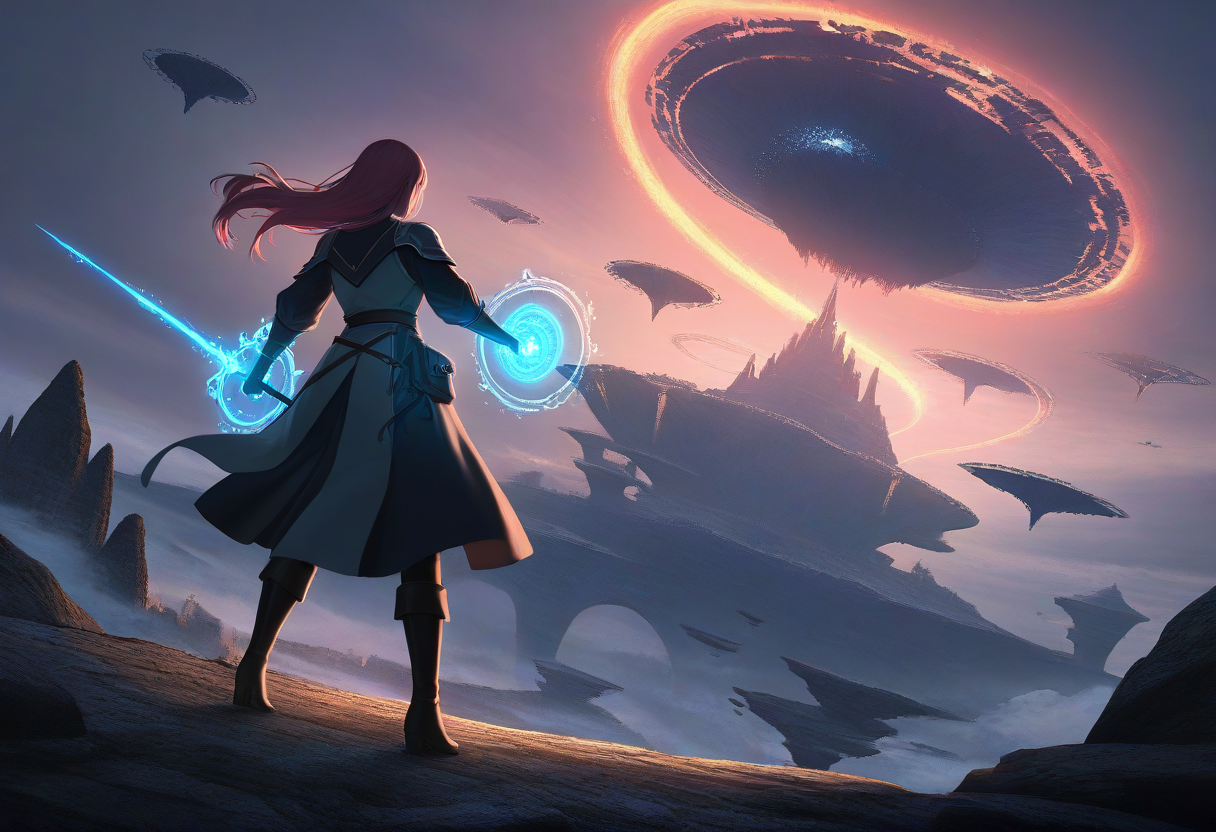
One second you are stuck in traffic, closing a spreadsheet, or reaching for the last convenience-store meat bun. The next, there is a glowing magic circle under your feet, a panicked royal summoner apologizing, and a status window blinking in the corner of your vision. Welcome to isekai, the “other world” genre anime built an entire universe on — and now it is yours to play. Isekai AI roleplay drops you into a fantasy world as the main character, not the reader. You pick the setup, you meet the companions, and the story bends around your choices instead of following someone else’s script. Below: world setups, ready-to-paste scenario openers, and a four-step guide to start today.
What isekai roleplay is
Isekai (異世界, literally “different world”) is the anime and light-novel genre where an ordinary person is transported, summoned, or reincarnated into another world — usually one with swords, magic, dungeons, and RPG-style rules. Isekai roleplay puts you in the protagonist’s seat: you are the one who wakes up in it, reads the status screen, meets the guild receptionist, and decides what happens next. The AI plays the world, the NPCs, and your companions; you play you. New to the genre? A quick “what is isekai” glossary explains the tropes, cheat skills and all.
Popular isekai setups
The Summoned Hero
A kingdom yanks you across worlds to fight the Demon Lord, hands you a legendary blade, and assumes you already know how.
Reincarnated with a Cheat Skill
You died and got reborn with one absurdly overpowered ability; now you have to figure out how not to break the world with it.
Trapped in the Game
You logged into a VRMMO and woke up inside it, where the "game over" screen is very real.
Slow-Life in a Fantasy Village
No Demon Lord, no war — just a cottage, a garden, weird magical livestock, and townsfolk slowly adopting you.
The Demon Lord's Castle
You are summoned to the wrong side, and the Demon Lord turns out to be lonely, bored, and unexpectedly polite.
Reincarnated as Something Else
You come back as a slime, a spider, or a sword, and level up from the very bottom.
Roll an isekai arrival scene
The widget assembles a ready first message from a landing, your role, a mood and a hook. Copy it and step through the portal.

How to set up an isekai RP
1. Pick your world and how you got there
Summoned, reincarnated, or sucked into a game? Choose the flavor (high-fantasy kingdom, cozy village, dungeon world, demon realm) and one hook: a status window, a cheat skill, a prophecy, or nothing but your wits.
2. Pick your role
The destined hero, a reborn nobody with a broken skill, or an ordinary person who just wants to survive and maybe open a shop? Your role sets the stakes and tone.
3. Choose a companion character
Every good isekai has an anchor: a guild receptionist, a knight escort, a talking familiar, the Demon Lord themselves. Pick one (or build your own) so the world has a face that reacts to you.
4. Open on the "arrival" scene
Start the moment you land. Describe actions in *asterisks*, speak in plain text, and end your first message with something for the world to answer.
You need a service that holds the world
Isekai lives or dies on continuity. Your cheat skill, the receptionist’s name, the debt you owe the guild, the slow-burn thing with the Demon Lord — all of it has to persist, or you are re-explaining your own world every few messages. Most mainstream chatbots either forget the setup halfway through or slam the brakes the second a romance subplot warms up.
RPDATE is built for long-running worlds: it holds context (your world and companions carry forward), runs in the browser with no VPN, and uncensored 18+ is optional — keep it a pure SFW adventure, or let a romance subplot actually go somewhere. Real character photos plus a character builder let you give a companion a face or build your own isekai partner; free to start, then pay per message. Honest caveat: RPDATE is Russian-first with an English interface, and the catalog is smaller than the biggest global platforms. The trade-off is a service that actually holds your world and will not cut the romance — exactly what long isekai arcs need.
Your other world is one message away
Pick a scenario, paste an opener, and step through — into a world that remembers your name and your cheat skill.
Open the catalog →free to start · holds your world · no VPN
Read next
Keeping Your Isekai World Consistent Over a Long Campaign
The fastest way an isekai campaign falls apart is contradiction - your cheat skill quietly changes rules, an NPC you killed shows up alive, or a faction switches motives with no reason. Fight this by keeping a short world-bible you paste or reference at the start of long sessions - one paragraph each for your protagonist, their exact cheat skill and its hard limits, the major factions, and the open quest threads. Give your cheat skill firm boundaries early - say 'Appraisal only reads stats below my own level' - so escalation feels earned rather than arbitrary. Track named NPCs with a single line each - name, allegiance, what they want, last thing they did - so a barmaid stays the same barmaid three arcs later. When a thread resolves, cross it off and open a new one, so the plot always has visible direction.
Consistency also lives in your own restraint - do not let the AI hand-wave a solved problem back into existence. RPDATE helps here because it holds context and remembers your world and companions across the conversation, so you are not re-teaching the setting every message. Even so, treat the model as a co-author, not a database - if a detail matters, restate it when you reintroduce it. A dropped fact tends to stay dropped; a repeated one becomes canon.
Pacing a Long Arc Versus a One-Shot
A one-shot isekai wants everything front-loaded - summon, hook, a single vivid conflict, resolution - so open with the inciting problem already burning rather than a slow tavern morning. A long campaign is the opposite discipline - you are budgeting tension across dozens of sessions, so start small and local, a village bandit rather than the demon lord, and let the scope widen only as your character does. Escalate in visible tiers - personal survival, then a town's fate, then a region, then the world - and let each tier introduce a stronger antagonist so the ceiling keeps rising. Seed your villain early as a rumor, a burned crest, a name whispered by a dying scout, long before the confrontation, so the payoff lands.
Power-creep is the real long-campaign killer - once the hero one-shots everything, stakes evaporate and scenes go flat. Counter it by scaling problems, not just enemies - a foe you cannot simply out-stat, a moral cost, a protected person, a puzzle your cheat skill does not solve. Introduce complications that make raw power irrelevant, like politics or a hostage. New abilities should unlock new problems, not erase old ones. Reward growth with harder questions, not easier fights.
Weaving a Romance Subplot Without Derailing the Plot
Romance works best as a thread braided through the adventure rather than a detour that halts it - tie relationship beats to the quest so they reinforce momentum instead of stealing it. Let a companion's feelings surface under pressure - a confession the night before a siege, a jealous glance during a negotiation - so emotion and stakes rise together. Give the love interest their own agenda and competence - a rival adventurer, a court mage, a fellow summoned hero - so they pull their weight in fights and are not just a reward. Alternate beats deliberately - a quest scene, then a quiet character scene, then back - so neither the plot nor the romance stalls. A good rule - never resolve the relationship and the main conflict in the same scene, or one will flatten the other.
Keep the intimacy calibrated to the story you actually want. RPDATE supports this because romance and 18+ content are optional and uncensored when you want them, and skippable when you do not - the relationship can stay slow-burn and plot-first, or heat up on your terms. Its world builder lets you define a companion's personality and history up front so their affection feels earned. Let the bond change how they fight beside you - that is when a subplot stops being filler and starts raising the stakes.

FAQ
What is isekai roleplay?+
Isekai roleplay is collaborative storytelling where you play an ordinary person transported, summoned, or reincarnated into a fantasy "other world," usually with magic, dungeons, and RPG-style rules. You play the protagonist; the AI plays the world, the NPCs, and your companions.
What are the best isekai scenarios?+
Crowd favorites are the summoned hero fighting a Demon Lord, being reincarnated with an overpowered cheat skill, getting trapped inside a game, and cozy slow-life arcs in a fantasy village. The scene builder above rolls copy-ready openers for exactly these.
Can isekai roleplay be 18+?+
It can, if you want it to. Plenty of isekai RP is pure SFW adventure. But on RPDATE, uncensored 18+ is optional, so if a romance subplot with a companion heats up, the story does not get cut off mid-scene.
Does the AI remember my world?+
On RPDATE, yes. It holds context, so your cheat skill, your companions, guild debts, and ongoing plot threads carry forward instead of resetting — which is what long isekai arcs depend on.
Is it free?+
You can start for free. After that RPDATE runs on a pay-per-message model, so you can test-drive a scenario first and only keep going if the world clicks.
Do I need a VPN?+
No. RPDATE runs right in your browser with no VPN and nothing to install. Open a tab and you are in the other world.
How do I start an isekai RP?+
Pick a world and how you arrived, pick your role, choose a companion character, then open on the arrival scene — describing actions in *asterisks* and ending with a hook for the world to react to.
Can I build my own isekai companion?+
Yes. RPDATE has a character builder, so you can design your own guild receptionist, knight escort, talking familiar, or Demon Lord and drop them straight into your world, complete with a character photo.

About The Author & Editorial Standards

RPDATE Editorial Team
Editorial pageEditorial Team
The RPDATE editorial team prepares practical guides on roleplay dialogue design, character dynamics, and scene structure. We focus on tested recommendations and clear product context.
This article is prepared by the RPDATE editorial team based on direct product usage, scenario testing, and platform-level comparison. We update guides when UX, pricing, filtering, or access conditions change.
What was tested:
- Real chat sessions with multiple character types and tags
- Conversation consistency, memory behavior, and prompt adherence
- Onboarding friction: signup, paywalls, platform constraints
Editorial policy
We separate observations from opinion, mark limitations explicitly, and avoid sponsor-driven ranking claims. If a section is outdated, we revise it after verification.
Verification & transparency
Recommended next reads
Gift from RPDATE - Balance Promo Code
Public promo code for blog readers: activate in your profile and get +5 balance bonus.
no activation limits