
AI Chat With Image Generation — AI Roleplay With Images
RPDATE is an AI chat with image generation built into the story rather than bolted on beside it. You write a scene with a character, and when a moment is worth seeing you ask for the picture of that moment — the frame is built from what the two of you just wrote. No second window, no prompt syntax to learn. Runs in the browser, free to start, 18+.
People search for this a dozen ways — an ai chatbot with image generation, ai roleplay with image generation, ai rp with images — and they all want the same thing: to stop imagining the scene and actually look at it. This page covers how the picture is made, how to write so it comes out the way you meant, what quietly ruins it, and where the limits genuinely are.
Scene helper: what to type to get the picture you meant
The image is built from what is written in the chat, so the sentence you send is the whole brief. Pick what you want to see, copy a line, paste it into your scene and ask for the photo on that message.
You want her face and her look — no story, no props, just her.
She stops in front of the mirror and takes a close photo of herself — head and shoulders, looking straight into the camera, warm lamp light from the left, the bedroom door out of focus behind her.
She leans against the window frame and holds the phone at arm’s length — from the waist up, half-smiling, grey afternoon light on her face, the rain-streaked glass behind her.
She turns towards you with the phone already raised, hair falling over one eye, still laughing at what you just said, the kitchen lamp behind her shoulder.
The lines above are examples written for this page, not output from any particular chat. Adult fictional characters only.
Characters to write a scene with
Characters from the real world: students, office workers, girls and guys of our time. Roleplay dialogues based on contemporary everyday life.
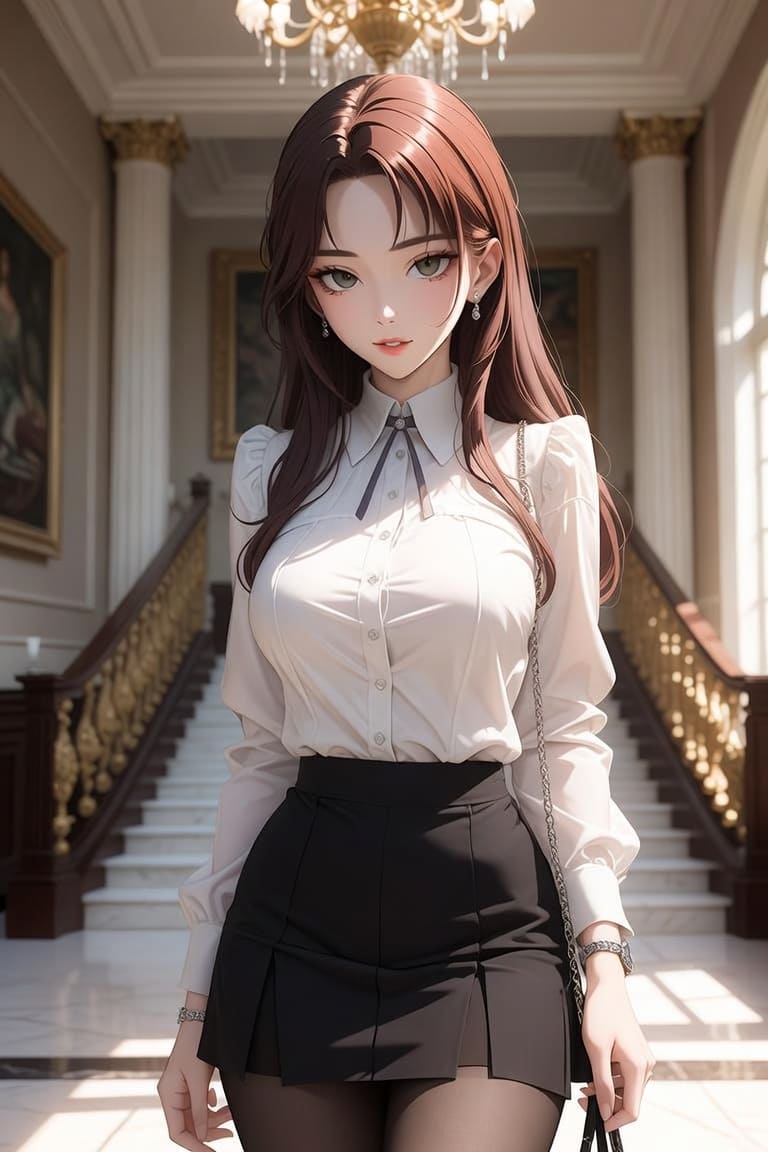

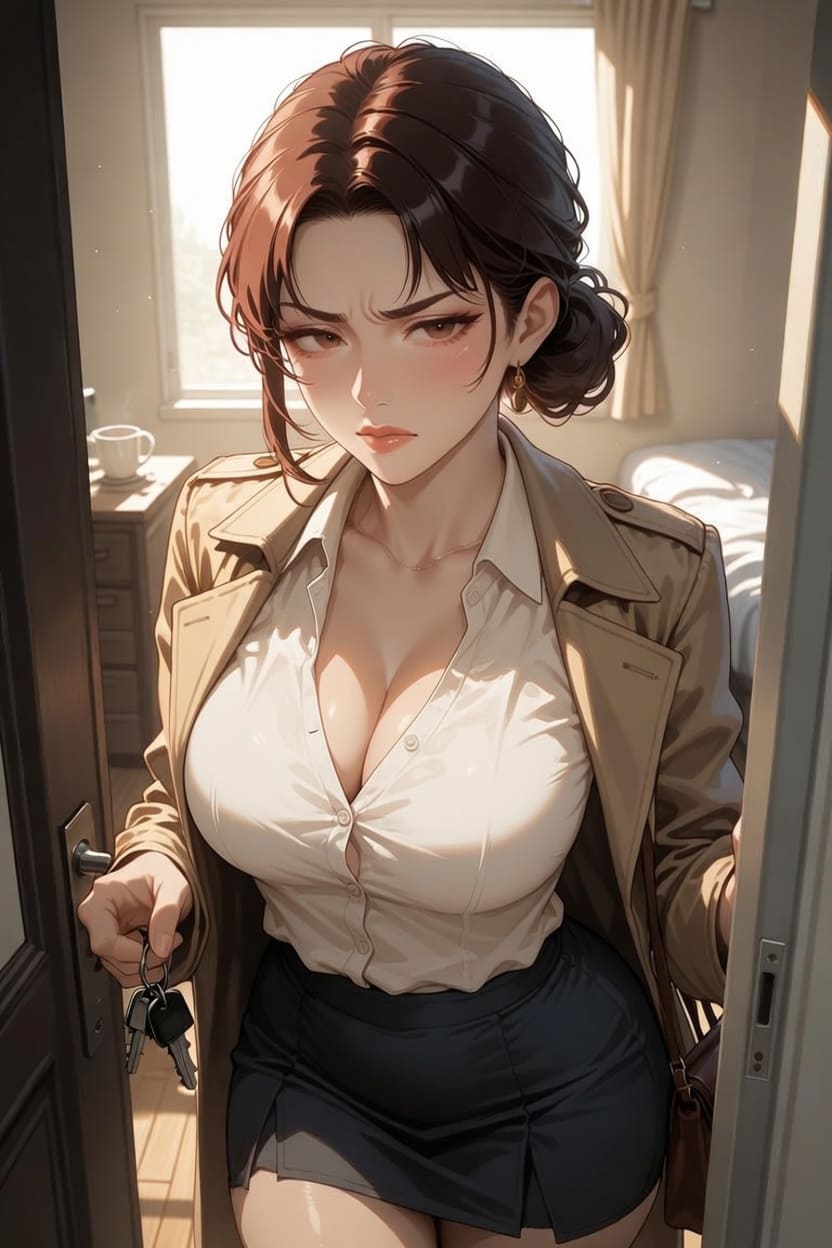

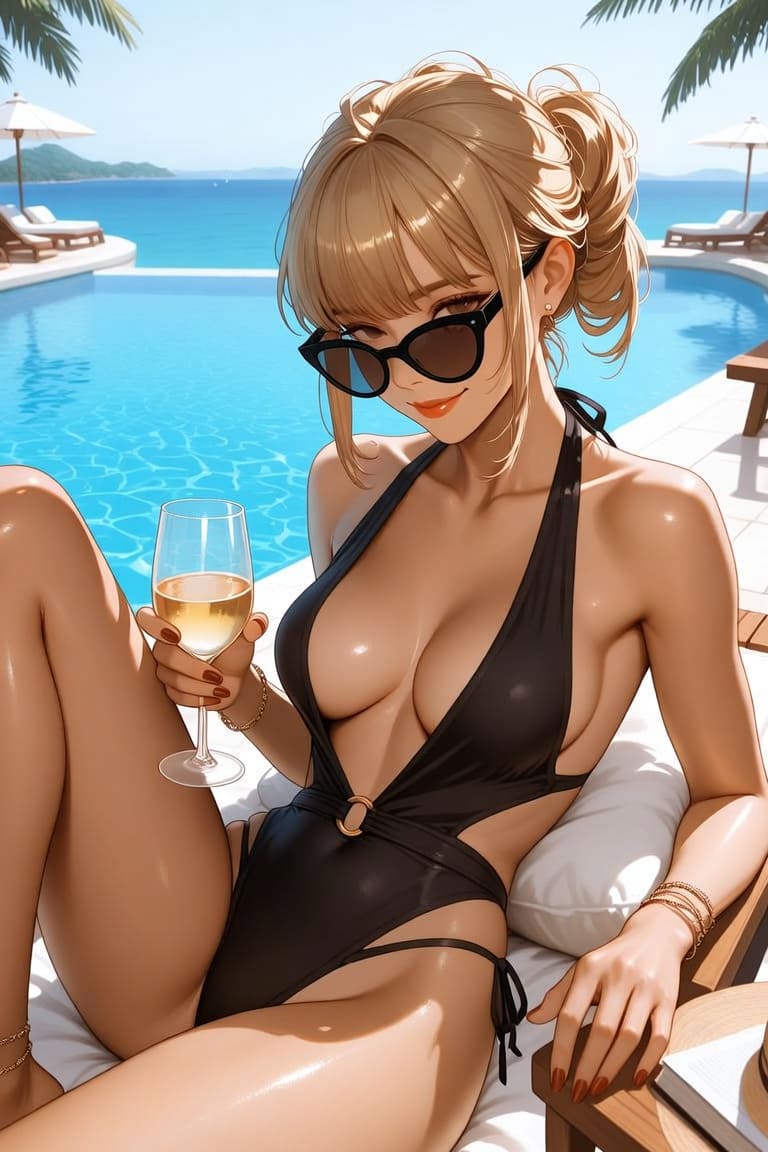

Swipe sideways
What an AI chat with image generation actually does
Most tools that put “chat” and “images” in the same sentence are two products sharing a login. You talk to a character in one place, and when you want a picture you go somewhere else, describe the woman from scratch, describe the room from scratch, describe the light, and hope the result resembles the person you have been talking to for the last hour. It usually does not, because the picture was made by something that never read the conversation.
Here the two things are one thing. The story lives in the chat, and the image is generated from a specific message in that chat. You point at the moment you want to see and the frame is assembled from what is already written there — the place, what she is doing, how she is dressed, what the light was doing when it was described. The character herself comes from her own card, so her face and build stay put while the scene around her changes.
That difference sounds small and changes everything about how you use it. In a standalone generator you are a person writing a specification. In an AI roleplay with images, you are a person telling a story, and the picture is a by-product of having told it well. The practical upside is that your best images usually come from the messages you wrote without thinking about images at all.
How a picture gets made from your chat
The flow has four steps and none of them require you to learn anything.
- Write the scene. Ordinary roleplay — you write your part, she writes hers. Nothing about this step is special, which is the point.
- Pick the moment. The photo action sits on the message itself, so you are choosing a specific beat of the story rather than a vague “now”. Pick the message that describes what you want to look at.
- Pick a style if you care. There is a style selector next to it, and switching styles does not change what an image costs. If you have no opinion, leave it where it is.
- Read the result honestly. If it missed, the fix is almost never “generate again” — it is one more sentence in the scene saying where you are or what the light is doing, and then generate.
Two things exist for when one shot is not enough. Refresh runs the same scene again — a second take of the same setup rather than a fresh interpretation of the conversation, which matters when the frame was right and you just want a different roll of the dice. A photoset takes the same moment and gives you four shots of it, which is the tool for “I like this scene, show me more of it” as opposed to “this scene is wrong”.
Everything above happens inside the conversation. The image lands in the chat as part of the story, in order, where it belongs — not in a separate gallery you have to go and visit.
When a picture makes the scene better — and when it wrecks it
Nobody tells you this part, so here it is. Images are not free of cost to the story. Every picture stops the reading and replaces something you were imagining with something fixed. Sometimes that is a gift and sometimes it is a demolition.
A picture earns its place when it settles something. The first time you see a character, when her face stops being a guess. After a change — new clothes, new place, a haircut she just described. At the end of a beat that took work to reach, where the image functions as a full stop. And at the start of a new chapter, where one establishing shot of the bar or the flat does more scene-setting than three paragraphs would.
A picture hurts when it interrupts momentum. Mid-argument, mid-confession, mid-anything with tension in it, an image is a pause button pressed by someone who was not enjoying the scene. It also hurts when you generate on every second message: you stop writing a story and start operating a camera, and the writing goes flat within a dozen messages because you are describing things to photograph rather than things to happen.
The rough rule that survives contact with real chats: let the scene get to a place worth photographing, then photograph it. If you are asking for a picture because nothing interesting is happening, the picture will not fix that — the scene needs a new event, not a new frame.
How to describe a scene so the picture matches
The single most useful habit is to write scenes that contain the answer to three questions: where are we, what is she doing right now, and where is the light. A message that answers all three is a message that can be photographed. A message that answers none of them is a message that has to be guessed at, and guesses are where generic pictures come from.
Location matters more than people expect. If nothing in the recent writing names a place, the frame will lean on wherever your story last was — which is fine when the scene has not moved and quietly wrong when it has. If you have walked out of the flat and into a car, say so in the prose. One clause is enough: “in the passenger seat, streetlights going past”. That clause is worth more than any adjective you could add to her.
| What you want | How to phrase it in the scene | What comes back |
|---|---|---|
| Her face | “head and shoulders, looking straight at you, lamp on the left” | A close portrait with the room only hinted at |
| The outfit | “full length against the plain hallway wall, oversized grey knit, black tights” | A frame built around the clothes, not the face |
| The room | “sitting on the bed, lamp on the floor, clothes over the chair, dark window” | A wider shot where the place is legible |
| The moment | “stay like that — hand still on the door frame, half turned back” | One frozen beat instead of a summary of five |
| The location itself | “wide shot of the bar — low ceiling, red light over the counter, rain on the window” | An establishing shot of your story’s world |
| Two people in frame | “from across the room — she leans forward, he sits back, one lamp between them” | A two-shot with a readable relationship between them |
None of this requires a different writing style. It requires the writing style good roleplay already rewards: concrete nouns, one action at a time, and a room that exists. The scene helper higher up this page hands you finished lines for each of these cases if you would rather copy than compose.
Why the character has to stay recognisable from picture to picture
A single good picture is easy. Ten pictures of the same person is the hard problem, and it is the one that decides whether an AI chat with image generation is worth using for more than an evening. If every shot returns a different woman, you do not have a character with photographs — you have a slideshow of strangers, and the story quietly stops being about anyone.
The way this holds together is a division of labour. Who she is — face, hair, build, the look that belongs to her — comes from the character, and it is carried into every generation whether you mention it or not. What is happening — the room, the pose, the clothes, the light — comes from the scene. You are only ever writing the second half. That is why you do not need to re-describe her eyes in every message, and why re-describing them differently is actively counterproductive.
Which gives three practical habits. First, do not fight the card: if her hair is dark, writing “her blonde hair catches the light” puts two contradictory instructions in the same frame and you will not like the compromise. Second, keep a style once you have chosen one — style is a look, and swapping it between shots of the same scene is the fastest way to make the same person stop looking like herself. Third, when something about her genuinely changes in the story, say so as an event: she cut her hair, she changed into the black dress. A change written as an event carries; a change written as a contradiction just confuses the frame.
For your own characters the same logic applies one level up. If you build a character and the description says “beautiful young woman”, you have specified nothing, and the images will vary as much as that sentence allows. Give her a specific look and the pictures inherit it every time.
What breaks the result
Almost every disappointing picture traces back to one of three causes, and all three are things you did in the writing rather than things the generator did to you.
There is a fourth, subtler one: generating from the wrong message. If you ask for the picture on a message where nothing visual happens — a line of dialogue, a one-word reply — the frame has almost nothing to work with and will reach for the nearest description it can find, which may be several beats old. Point at the message that has the scene in it.
And the fifth, which is really a discipline problem: regenerating instead of rewriting. If a frame comes back wrong, another roll of the same dice usually returns a differently wrong frame. One added sentence in the scene fixes more than five retries, and costs less.
Portrait or scene: two different jobs
People treat these as the same request with different amounts of zoom. They are not. A portrait and a scene want opposite things from your writing, and mixing them is why so many pictures come back feeling like neither.
A portrait wants an empty background. Its job is her face, and every object behind her is competition — a busy room in a close shot is visual noise nobody asked for. So a portrait line names distance and light and then stops: head and shoulders, warm lamp from the left, door out of focus behind her. It does not need the story. It barely needs the room.
A scene wants the opposite: objects, distance, and something happening. Its job is the place and the moment, and her face is one element inside it. Two or three concrete things — a lamp on the floor, clothes over a chair, plates in the sink — do more work than any amount of atmosphere-word stacking. A scene also wants a camera position, because “from the doorway” and “from across the room” are two different pictures of one event.
In practice the useful move is to alternate. A portrait when you want her, a scene when you want the story, and an establishing shot when the story moves somewhere new. A chat that is all portraits becomes a modelling folder; a chat that is all wide scenes never lets you see anybody’s face.
AI roleplay with images: running a story, not filling a gallery
The searches around this — ai roleplay with image generation, ai rp with images — come from two different people. One wants pictures and tolerates the chat as the interface for getting them. The other wants the story and wants to see it occasionally. It is worth knowing which one you are, because the tool rewards them differently.
If you are the first, the fastest route is to write a short, heavily visual scene: state the place, state what she is wearing, state what she is doing, and generate. Three sentences of setup will beat thirty of banter every time, because the frame reads what is written and nothing else. Then use refresh and photosets to work the same setup rather than rewriting it.
If you are the second, do the opposite: forget images for the first stretch entirely. Let the scene build, let the character get a voice, let something actually happen. The picture you take twenty messages in will be better than anything you could have generated at message three, because by then the scene contains a place, a mood and a reason. This is the version of the feature that people stay for, and the one that ordinary image generators cannot reproduce — no prompt box knows what your last hour was about.
If you want the writing side to be stronger first, the roleplay guide covers how to open a scene and keep it moving, and RP chat has a builder that writes your opening post. Better scenes make better pictures — that relationship runs in one direction only.
Where the limits are, said once
This is an adult platform and adult scenes between adult fictional characters are part of what it is for. Characters here stay in role rather than breaking a scene to lecture you about it. That is the permissive half, and it is genuinely permissive.
The other half is fixed. Every character is a fictional adult, and that is not a setting anyone can change. Images of real, identifiable people are not made here — not celebrities, not someone from a photo you have, not a person you describe by name and expect the frame to recognise. These are legal requirements and platform rules, not an over-cautious filter that a better prompt would get around. If you came looking for an “ai chatbot with image generation and no restrictions”, the honest version is that a service with genuinely no restrictions would be one you should not trust with a payment card.
Everything inside those lines — romance, tension, adult scenes with fictional adults, the whole range of stories people actually come here to write — is available without you having to negotiate for it every few messages.
Free and paid, without the sales voice
The chat opens without an account. You can pick a character and start writing immediately, and the free messages at the start are real messages — enough to find out whether the character is any good and whether the writing holds up, which is the only test that matters. After that, continuing is a paid subscription. That is the whole model and there is no version of this page that pretends otherwise.
Image generation sits on the paid side. Pictures cost real compute to produce, so they are part of paid access rather than something handed out endlessly for free, and generating one requires being signed in with a balance to draw on. What is worth saying plainly: choosing a different style does not change what an image costs, so the style selector is a preference and not an upsell.
Not every character supports image generation. On the ones that do, the photo action is on the message itself; where it is absent, that character is text only. This is worth checking before you build a long story around a picture you were expecting to be able to take.
Two claims you will see elsewhere and will not see here: “free forever” and “unlimited images”. Neither is true of anything that generates pictures on demand, and services that print them either meter you somewhere you have not looked yet or are about to change the deal.
Starting from nothing, in five minutes
Open the character catalog and pick someone whose opening scene you actually want to be in — that choice does more for the next hour than any setting. Write two or three messages in your own voice, and put a place in them: a kitchen, a car, a stairwell, anywhere with objects. Let her answer. Let the scene find a shape.
When something is worth looking at, add the sentence that makes it photographable — one line naming distance, light and what she is doing — and take the picture on that message. If it comes back close but not right, do not spin the wheel again: change one thing in the scene and take it again. If it comes back right, keep going and take the next one twenty messages later, when the story has moved.
If none of the existing characters fit, build your own and give her a specific look rather than a flattering one — that description is what every picture of her will inherit. Then open a chat and write the first line.
FAQ
Is there an AI chat with image generation that is free?
It is free to start. You can open a character and begin the story without an account, and the free messages at the start are real messages, not a trailer. Images are part of paid access rather than part of the free tier, so the honest answer to “ai chat with image generation free” is: the chat, yes; the pictures, no. Anyone promising unlimited free image generation forever is either about to change their mind or about to show you the ads.
How does the image generation work in the chat?
It reads the scene you are already in. You do not switch to a separate prompt box and describe everything from scratch — you point at a message in the conversation and ask for the picture of that moment, and the frame is built from what was written there: where you are, what she is doing, how the light was described. That is why the writing in the scene matters more than any clever prompt syntax.
Is this an AI chatbot with image generation and no restrictions?
No, and no honest service will tell you otherwise. Adult scenes between adult fictional characters are fine here and the characters stay in role instead of breaking the scene with a lecture. What is off the table is fixed and not negotiable: no minors, and no images of real, identifiable people. Those are legal lines and platform rules, not a mood setting somebody forgot to switch off.
Why does the picture not look like the scene I wrote?
Nine times out of ten the line was doing three jobs at once. A picture holds one instant, so if the message describes her standing up, crossing the room and opening the window, the image has to pick one of the three. The other common cause is a scene that never says where it is: if nothing names the place, the frame falls back on wherever your story was last, which is often not where you think it is.
Can I get another picture of the same scene?
Yes. A generated image can be refreshed, which runs the same scene again rather than re-reading the conversation from scratch — that is the difference between a second take and a different shoot. You can also ask for a photoset of the same moment when you want a few angles of one beat instead of one and done.
Does every character support image generation?
No. Supported characters offer in-chat image generation, and on those the photo action sits on the message itself. If you do not see it, that character does not do pictures — pick another from the catalog rather than assuming the feature is broken.
Can I use image generation with a character I made myself?
Custom characters can carry image generation too, and the same rule applies as everywhere else: the picture leans on how the character is described. A card with a specific look — hair, build, the clothes she actually wears — gives you consistent images. A card that says “beautiful girl” gives you a different woman every time, and that is the card’s fault, not the generator’s.
Is this AI roleplay with images or just a picture generator?
Roleplay first. The story is the point and the images are illustrations of it, which is exactly why they land — the frame already knows who she is, what room you are in and what just happened. A standalone picture generator starts from nothing every single time and you pay for that in typing.
Do I need to install anything?
No. It runs in the browser on a phone or a desktop — open the site, pick a character, start writing. There is no app to download and nothing to configure before the first scene.
Can I choose the style of the picture?
Yes, there is a style selector next to the photo action, and switching between the styles does not change what a picture costs. Style is a look, not a quality tier, so the practical advice is to pick one you like and leave it alone — changing style between shots of the same scene is one of the fastest ways to make a character stop looking like herself.
Where to go next
Images are one part of what happens in these chats. If a different part is what you actually came for, these are the pages worth your time.
Popular sections
What users say
Real impressions from people already telling their stories on RPDATE.
First app where the character actually stays in role. It doesn’t slide into “how can I help you” after three messages — the scene keeps living.
Opened it right in the browser — no VPN, no install. Writes proper English too, not some machine translation. That’s what sold me.
I like paying per message instead of a subscription that just sits there draining. Play, top up, walk away — nothing keeps charging.
Built my own character exactly how I wanted — personality, way of talking, the opening scene. Got what I was after, not another template.
The atmosphere is there and characters hold the context. I’d like more girls in the catalog, but they keep adding new ones.
18+ scenes that don’t cut off at the best part. You steer the story yourself — from light flirting to wherever. That’s why I stuck around.
The memory panel is the thing I didn’t know I was missing. She brings up stuff I said a week ago, and I can fix the list by hand if she got something wrong.
You can ask for a picture mid-scene and it’s about what’s happening, not some random render from nowhere. That’s what I top up for.
Runs fine on my phone in the browser. I read on the train, type two lines, close it. Nothing to install.
Being able to fix my own last message is underrated — one typo used to send the whole scene sideways. Would still like a way to roll back hers.
Replies are long enough to actually read. Most bots give you two lines and wait; here I get a paragraph that moves the story.
Tried the first scene with no account at all, just to see what it was. Stayed anyway.
Came for the male characters — they’re here and written just as well as the girls, though there are noticeably fewer of them.
The daily bonus is enough to play through an evening without topping up. Small thing, but it keeps me coming back.
Every picture from my scenes lands in my own gallery. Minor detail, but it starts feeling like my story instead of someone’s service.